$17.7 trillion
That's how much investment the global oil industry will need through 2050 to meet growing demand. That's more than $700 billion a year.

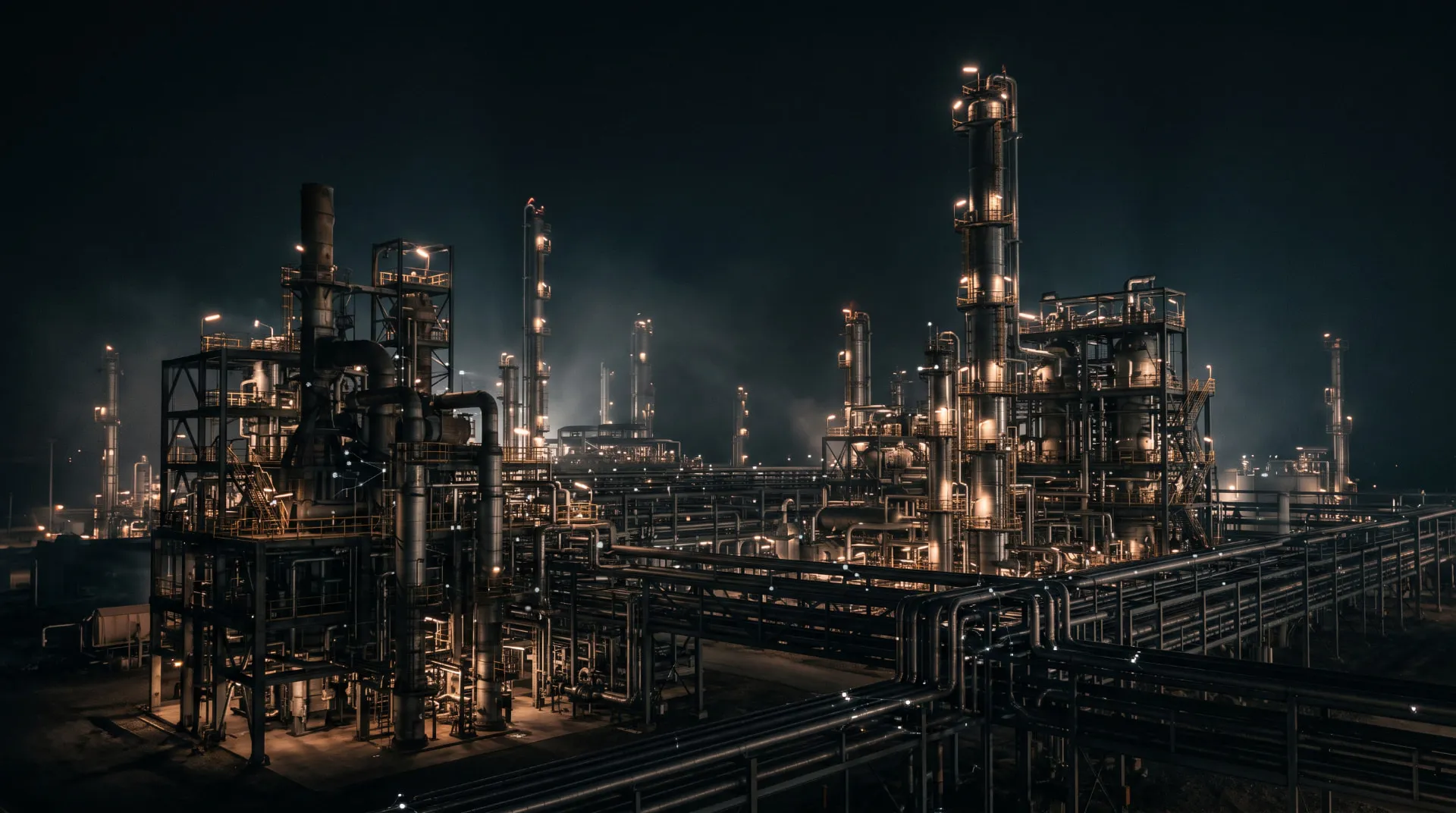
Global energy trading is one of the largest markets on the planet. And one of the most complex. Trillions of dollars, thousands of participants, and millions of signals changing every second.
Tarivalum was built to work with this complexity. Not in spite of it — but together with it.
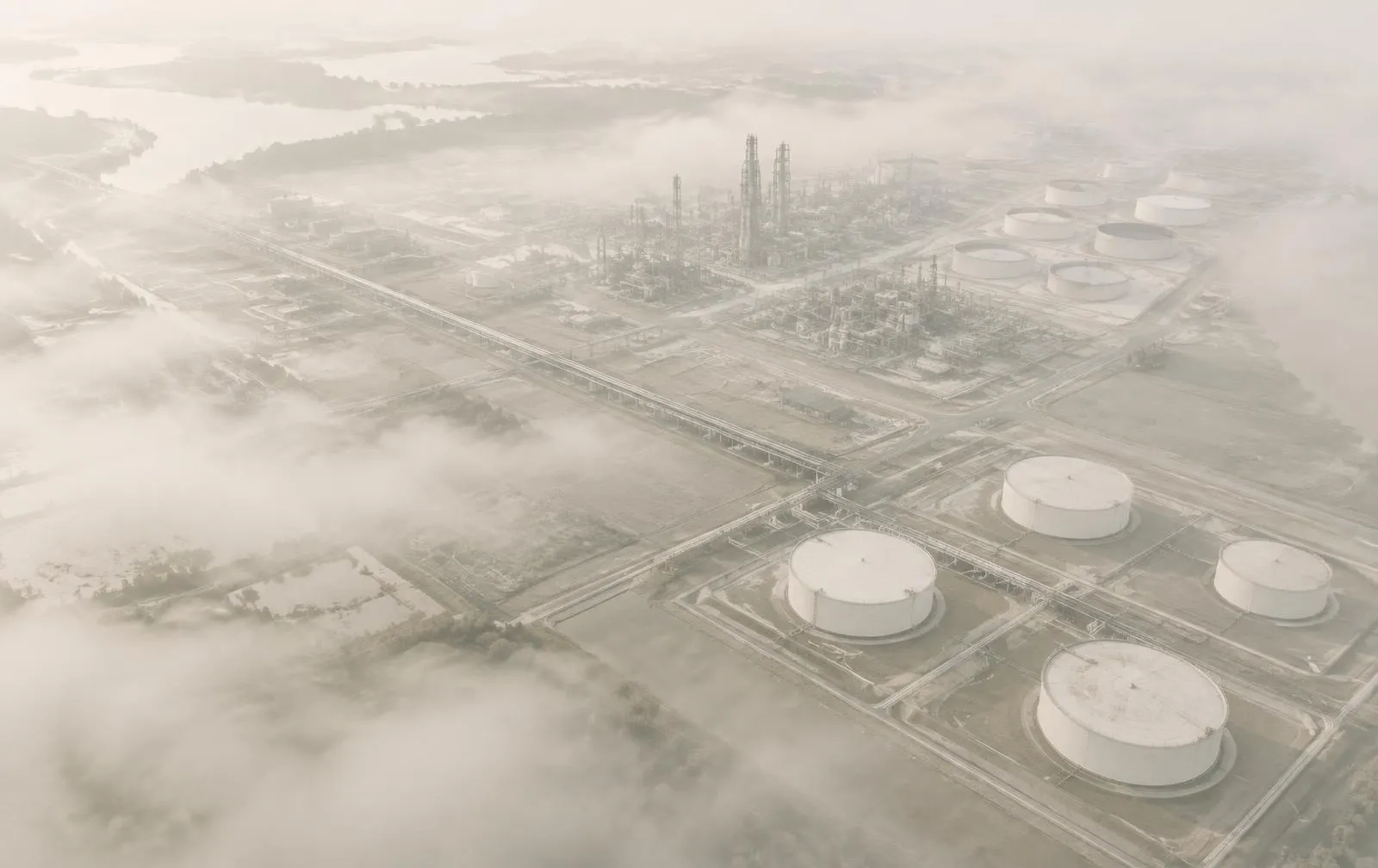
Oil and gas are the backbone of the global economy. Transport, industry, power, chemicals — all of it rests on hydrocarbons. And demand isn't falling: it's growing.

That's how much investment the global oil industry will need through 2050 to meet growing demand. That's more than $700 billion a year.
Estimated remaining recoverable oil and gas reserves worldwide. That's enough to last for decades — and the market will remain active as long as there is demand.
The share of fossil fuels in the global energy mix. Oil, gas, and coal still provide the vast majority of the world's energy.
Projected global oil demand by 2030. At a projected Brent price of around $70 per barrel, that amounts to $7.9 billion a day.
That's how much new liquefied natural gas (LNG) supply will enter the global market by 2030.
Scales like these can't be grasped by hand. The market grows, shifts its structure, and reacts to events faster than a human can make sense of them. That's exactly why Tarivalum works with data automatically and continuously — to keep up with the pace the market itself sets.
See how Tarivalum works with the oil and gas market.The oil and gas market isn't uniform. Upstream, midstream, downstream — each segment lives by its own laws, reacts to its own signals, and opens up its own opportunities. Tarivalum works with all three segments — and in each one, the AI delivers what a human can't see.
Companies that find and extract oil and gas. Their stocks and futures are among the most volatile instruments on the market. A single OPEC+ decision or a single inventory report can move prices by several percent within minutes.
Oil prices, OPEC+ production volumes and deviations from quotas, rig count data, inventory dynamics in Cushing, geopolitical events.
Global production is growing at a moderate pace. The main growth comes from offshore projects in Brazil, Guyana, Suriname, and West Africa. Oil demand will reach 113.3 million barrels per day by 2030. This isn't a fading market — it's a market that's restructuring.
Upstream reacts to news faster than any other segment. A human physically can't process the entire flow: OPEC+ reports, EIA data, news from the fields. The algorithms analyze all of it simultaneously and find entry points before the market has time to react.
For the investor, this means: understanding in oil price movements without manually tracking dozens of factors. The Tarivalum algorithm sees the full picture — you see the result.
Pipelines, tankers, terminals, storage facilities. The infrastructure that links production and refining. This segment is less volatile, but it's precisely where signals about future shortages or oversupply take shape.
Route utilization, LNG volumes, demand in Asia and Europe, seasonality, weather anomalies, congestion at key ports and straits.
LNG infrastructure is booming: around 300 billion m³ of new capacity will come online by 2030. The U.S. and Qatar will account for about 70% of the growth. The need for flexible supply and short-term contracts is growing — and so is the need for analytics.
Midstream is sensitive to logistics and seasonality. Tarivalum's algorithms track tanker routes through the Strait of Hormuz, terminal utilization, and weather models — and predict changes in supply before they're reflected in price.
For the investor: understanding where a shortage or oversupply will emerge — and how it will affect the market. Acting ahead of the curve, not reacting to the news.
Oil refining, petrochemicals, fuel production, sales to the end consumer. A segment that depends less on geopolitics and more on fundamental factors: margins, demand, consumption structure.
Refining margins, refinery utilization, fuel demand, petrochemicals, seasonality, electric vehicles.
Demand for traditional fuels is gradually shifting, but petrochemicals are growing. By 2030, one in every six barrels of oil will go to the chemical industry — a new, stable source of demand. Refining margins remain attractive.
Downstream depends on demand structure. The algorithms analyze data on margins, refinery utilization, and petrochemical demand — and find patterns that aren't visible in siloed analysis. Here, Tarivalum's AI works not with speed, but with depth.
For the investor, this means: working with a segment that depends less on geopolitics and more on fundamental factors. A more predictable environment.
Upstream, midstream, and downstream don't exist separately. They influence each other — and it's precisely at the intersection of these connections that the strongest signals are born.
Three segments — that's three separate streams of data. An analyst looks at each one in turn: first inventories, then routes, then margins. That takes hours
Tarivalum processes all three streams simultaneously. When Cushing inventories rise while tanker utilization in the Strait of Hormuz falls — that's not two news items. It's a single signal about a shift in the supply-demand balance.
The ability to act on the full picture, not fragments. The algorithm sees the connections between segments — and reacts before the market has time to grasp them.
Speed of reaction.
Understanding of logistics.
Depth of fundamental factors.
All of it together — in a single environment.
We've gathered what's important to understand before you start working with Tarivalum.
It's one of the largest markets in the world, with high volatility and a multitude of influencing factors — from geopolitics to weather. It runs around the clock and reacts to events instantly.
The three segments of the market. Upstream — exploration and production. Midstream — transportation and storage. Downstream — refining and distribution. Each segment lives by its own laws and reacts to its own signals.
The volume of data and the speed at which it arrives exceed human capacity. AI processes thousands of signals simultaneously and finds connections between segments that aren't visible in manual analysis.
Brent, WTI, and natural gas futures contracts (Henry Hub, TTF), EIA data, OPEC+ reports, tanker routes, weather models, and market quotes.
Tarivalum works with all three segments simultaneously — that's precisely its advantage. The connections between segments form a more complete picture of the market.